Start with the ranch, not the vehicle
A ranch wedding shuttle plan begins at the property entrance, not with a photograph of a bus. A vehicle that fits your guest count may not fit a narrow gate, turn comfortably at the ceremony site or have permission to wait beside the reception. Before requesting transportation, ask the venue manager for the approved guest entrance, loading location and vehicle restrictions. Get those details in writing and share them with the transportation provider before selecting equipment.
This guide focuses on moving invited guests between lodging and a ranch venue. Treat wedding-party portraits, vendor deliveries and airport arrivals as separate assignments unless the provider specifically includes them. Mixing those jobs into the guest shuttle can leave the main vehicle unavailable when the next group is ready. A clear scope also makes estimates easier to compare: each provider should be pricing the same passenger movements and waiting arrangements.
Get an access answer for every part of the route
Ask whether the approach includes unpaved road, steep grades, low branches, weight restrictions or a narrow bridge. Do not assume that a vehicle permitted on the public road can continue onto the property. The venue should identify where a larger vehicle can turn around without reversing through pedestrians. Ask who can authorize an alternate loading location if the usual area becomes unusable.
Send the provider a marked map showing the entrance, unloading point, staging area and exit. A map pin alone can route a chauffeur to a service gate rather than the guest entrance. Request confirmation that the proposed vehicle and route are acceptable; photographs or a site review may be needed. If access remains uncertain, keep the vehicle choice provisional rather than treating an unverified driveway as an operational detail.
Identify who controls the gate on the wedding day and how that person can be reached. A locked entrance or delivery truck can disrupt an otherwise sensible plan. Establish a waiting location outside the property only if it is legal and approved, and never instruct guests to gather along an unprotected roadside.
Turn lodging responses into a usable guest manifest
Collect transportation requests with the RSVP rather than estimating demand from the invitation count. Ask for each rider’s name, lodging pickup group, requested outbound trip and intended return window. Include children and anyone who needs assistance boarding. Ask privately about functional needs, such as step height or room for a mobility device, without collecting unnecessary medical information. Confirm an appropriate vehicle instead of assuming every shuttle is accessible.
Group riders at a few approved pickup points where possible. A collection of individual rental addresses can turn one shuttle trip into a long series of stops. Tell guests exactly where to stand, not simply which hotel is listed. Obtain any necessary loading permission and make clear that transportation arrangements do not imply a hotel partnership.
Keep one master manifest with a version date and one person responsible for changes. Share only the information the coordinator and provider need. A late RSVP should trigger a seat check, not an informal instruction to squeeze someone aboard. Count the couple and wedding party separately if their transportation is handled elsewhere.
Calculate seats and cycles before promising a departure
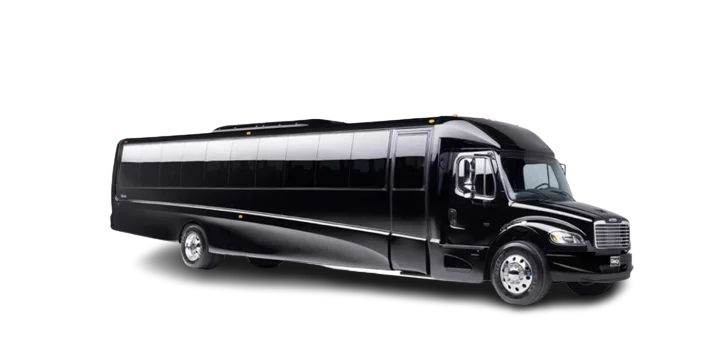
Capacity planning is about the number of people moved within the available arrival window, not just the largest vehicle available. Motor coaches seat 40–56; party buses typically seat 20–40, with some up to about 50. Sprinter limo or party vans seat 14–16. Those are fleet categories, not a promise that a particular vehicle is available or suitable for the ranch. Confirm the actual vehicle, legal seating capacity and storage needs in the estimate.
For illustration, 84 confirmed riders using a 40-seat vehicle require at least three loaded trips. A cycle includes boarding, the outbound drive, unloading, the empty return and a practical buffer. If the venue’s arrival window cannot accommodate three complete movements, add suitable capacity, start earlier or revise the pickup design. Do not calculate the schedule from driving time alone.
Confirm whether the vehicle remains at the ranch or returns to lodging between assignments. A vehicle stationed at the reception cannot simultaneously collect another group. Likewise, an empty return is still operational time even though guests are not aboard. Ask the provider to show how each assigned vehicle covers its work without relying on overlapping trips.
Make boarding simple for guests and coordinators
Give each pickup group a short instruction with its location, boarding time and departure time. Explain whether seats are assigned by departure or available within a managed window. Guests should not have to interpret a spreadsheet to find their ride. A named coordinator at the main pickup point can check names, direct questions and tell the venue when the final planned outbound group has left.
Build a process for missed departures before invitations go out. State whom a late guest should contact and whether another scheduled shuttle is available. Do not promise that the chauffeur will turn around or hold every departure. Those decisions affect everyone already aboard and should go through the designated transportation coordinator.
Check what guests will carry: coats, welcome bags, children’s supplies and mobility equipment all affect boarding and storage. Ask the provider where these items can travel securely. Keep aisles and exits clear, and do not use an empty seat as an assumed substitute for a suitable luggage compartment.
Design the return service as carefully as the arrival
Reception departures rarely happen as one perfectly synchronized group. Some guests leave after dinner, while others stay until the final song. Survey likely early-return demand and agree on scheduled departure windows or another explicitly booked arrangement. A vague promise of continuous shuttles is not enough; the plan needs vehicle assignments, destinations and a final departure.
Place the return boarding point where guests can find it without walking through vehicle movements. Ask the venue how lighting, signage and staff assistance will work after dark. Identify a sheltered waiting option if one is available, but do not advertise facilities the venue has not confirmed. The coordinator should know which guests need additional boarding time.
For multiple lodging groups, decide whether returns are direct or combined. A combined trip may be efficient but keeps the last group aboard longer. Publish the destination order and ask the provider to check that it works with the booked hours. End with a headcount process so the final shuttle is not released while an expected rider is still inside.
Request a quote that matches the actual ranch operation
Send the provider the guest count by pickup group, venue access notes, proposed arrival window, return pattern and any boarding requirements. Ask what is included in the booked service period, how waiting and additional trips are handled, and what happens if the reception runs late. Have the venue and planner review the same movement plan before you confirm.
Most bookings have a four-hour minimum; prom, homecoming and high-season Friday–Sunday bookings have a six-hour minimum. The rate is locked in when you book, with no surge pricing. Chauffeur gratuity is not included.
Text (970) 672-0787 with your ranch access details and pickup groups for a FREE custom estimate; we’ll text you back. Before the wedding, circulate one final movement sheet to the venue, planner and transportation provider. It should identify who can authorize changes, not just list departure times. That shared document is what turns a collection of rides into a workable guest shuttle plan.